
I turned down a university place to go and work underwater.
Forty years building things that run without me. Now I do the same for founders.
Not theory. I've built, run, and sold at exactly the stage you're in now.
$2M → $24M · 7× Inc 5000 · 5 exits · 40 years getting things done
30 minutes. You'll leave knowing exactly where your bottleneck is.
Deep underwater, you learn things that don't leave you.
Calm beats panic. The system keeps you alive. The small detail you can't be bothered with is the one that kills you. Trust the crew, or don't go down at all.
I've run every business I've touched since the same way.
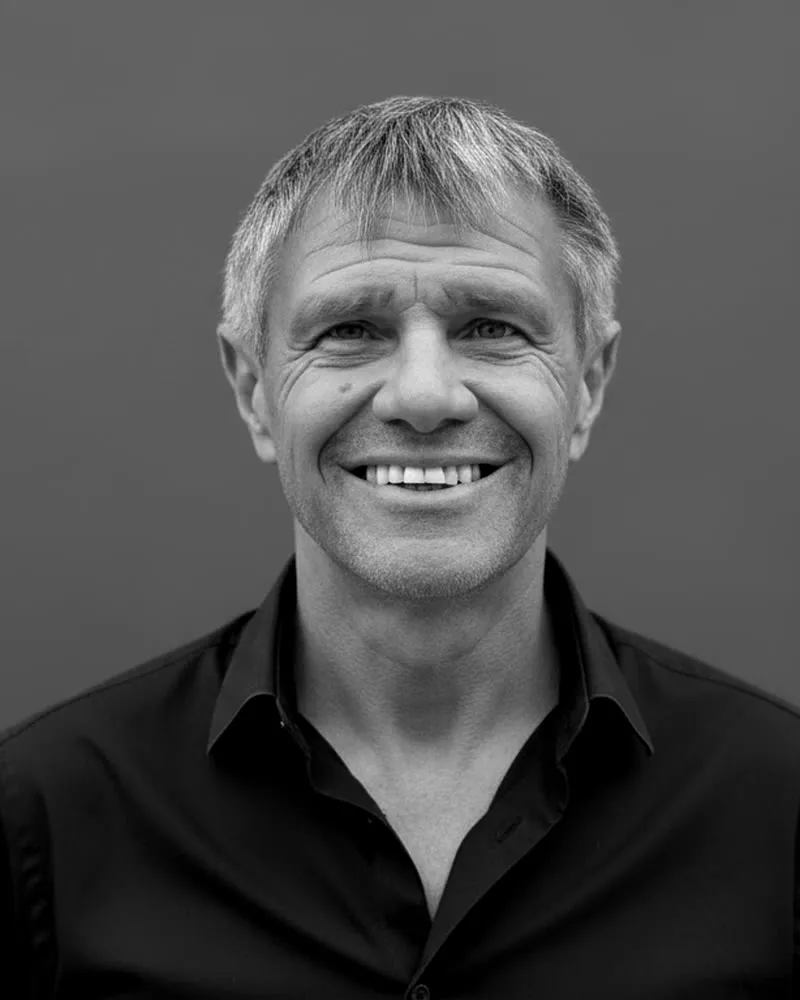
I'm a Yorkshireman.
I still sound like one.
My grandfather was the head gardener of Harewood House in Yorkshire. I grew up watching him work. Patient, methodical, every task done in the right order, no drama about it.
I won a scholarship to Loughborough to read chemistry and maths, and my friend Daniel got a place at Brighton doing history of art. He had four hours a week of tutor time. I had forty. Same level of degree at the end of it. I didn't stay long.
I turned the scholarship down and went and learned to dive instead.
That was the first time I ran the numbers on something and didn't like the answer. It wasn't the last.
North Sea. Gulf of Mexico. West Africa. One of the youngest submersible pilots in the world at the time. Two degrees and an MBA came later, all of it done while working. I've never stopped.
After that, I never did the same job twice. It was always the same job.
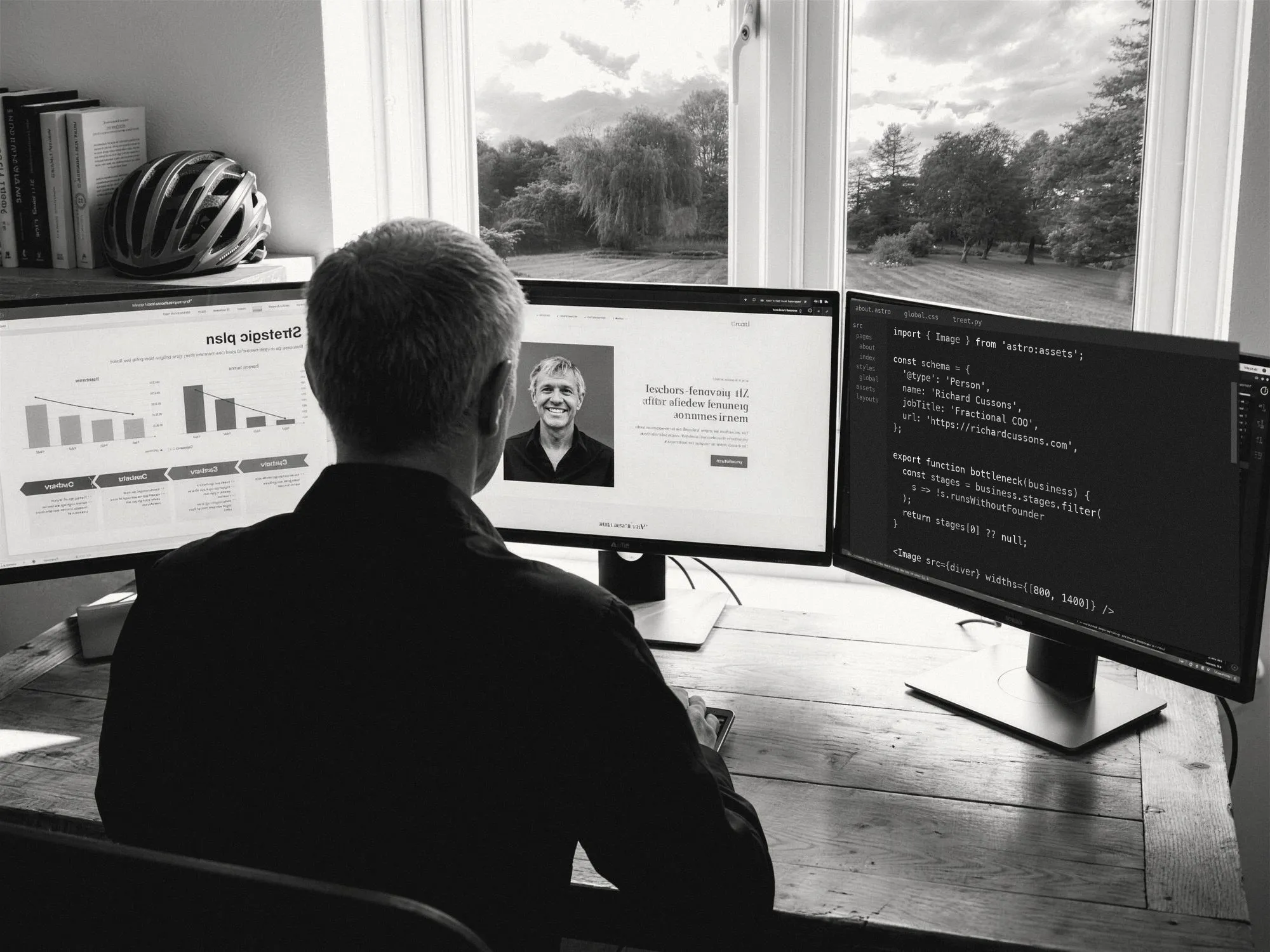
My first job after the water was cinemas. Two sites losing money, running at 14% full. By the time I left the last one we were at 59%. Then a theatre in Reading, and a seaside pavilion carrying real debt in a town that had quietly given up on itself. I took 75% off that debt and left it with a plan that kept working when I wasn't there. Ten years in leisure, entertainment and tourism. Always the same job: find what's holding it back, fix the execution layer, and get out of the way.
Then the internet arrived and I thought I'd died and gone to heaven. Cinemas and theatres sold to whoever walked past. Now the whole world was walking past. You could test what people wanted in a week instead of a season, see exactly what was working and what wasn't, and fix it the same afternoon. I was commercial director at a tourism publisher on the South Coast. We built one of the first commercial tourism websites in the country, and Guardian Media Group bought the company. My first exit. After that I took a building firm in Dorset from low hundreds of thousands to multi-seven figures in three years, and spent six years alongside it advising Lloyds Bank, Deutsche Bank and their clients on turning strategy into something a team could actually run. Somewhere in the middle of all that, in 1998, I sold my first thing online myself. I've been selling online ever since.
And for eighteen years the businesses were mine, with distributed teams before anybody had a word for that. BBQGrills.com was the one I struggled with. Suppliers, inventory, the site itself, all of it coming back to me, because I was taking shortcuts and doing too much on my own. Twenty years fixing that for other people, and there I was doing it to myself. You can't read the label from inside the bottle. The others I got right. Forex, pet care, supplements, each of them set up like a proper company: a remote team, written procedures, the right technology, a customer journey that worked, and automation while it was still new. The pet care business grew to seven million dollars a year and ran without me. I sold it. The supplements business went from start-up to exit in four years.
Diving, cinemas, theatres, tourism, pet care, supplements, forex. None of it connected, except all of it was identical.
I just didn't have a word for what I was yet.
And if you're running a business that's outgrown the way you run it, you already know it isn't the ideas that are missing.
Then I met Ryan Levesque, and forty years finally had a name: integrator.
"I felt like I had reached the limits of my capabilities as an operator, while also simultaneously serving as the main creative force in the business. 'I think I need a Richard,' I told him."Ryan Levesque, founder of the ASK Method. Facebook, October 2024.
I paid to join Ryan's mastermind in 2014. Shortly after, he tried to give me my money back. My pet care business competed with a private client of his. I'd already booked the flights from the UK, so I swapped in the supplement company I'd built and stayed. Ryan still calls it the double rejection.
While I was there I helped a number of the other members scale their businesses too. A realtor, a national publishing house, and someone in personal development. Ryan noticed. Two years on, after his first book took off, he'd gone as far as he could on his own and didn't know how to scale the business. He asked me to come and do it. I started on a three-month contract.
His problem was the one I'd been fixing my whole working life. He had all the plans. He set the plans. And they just fell apart.
There's a name for it, and I got it from a book called Rocket Fuel. Two jobs sit at the top of every growing business. The visionary sees what's possible and won't stop having ideas. The integrator turns all of that into things that actually happen: the operating rhythm, the accountability, the decisions that stop waiting on one person.
Ryan was the visionary. Forty years, and I'd been the integrator the whole time.
A visionary without an integrator always ends up in the same place. The ideas keep coming, the business can't keep up, and it only ever moves as fast as one tired person. Ryan was there at two million a year. The first launch we worked on together hit $3 million. Nine years later: $24 million, 4× Inc 5000, a team of a hundred people.
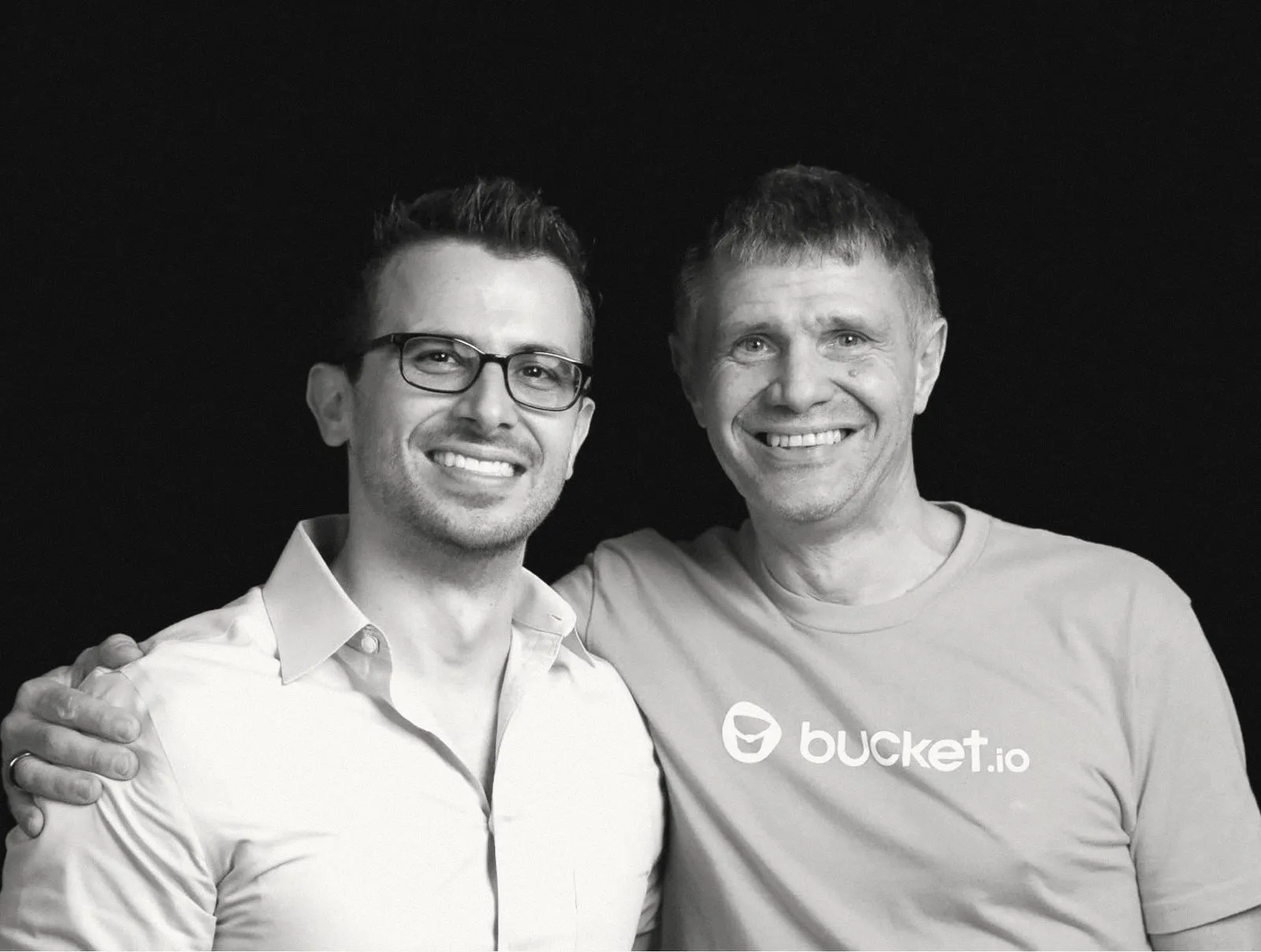
In parallel, Ryan and I co-founded Bucket.io, a market-segmentation SaaS built part-time from scratch. 3× Inc 5000, sold to ScoreApp in 2024.
I retired again in 2024. It didn't take either.
The first time was 2009, after the web portfolio sold. The second was after Bucket.io sold. Now I'm in the background helping Ryan with his latest book, Return To Real, and the advisory and agency that have grown up alongside it. In an age of artificial everything, real is the last advantage left, and the businesses that win now are the ones that keep a real person on the other end for the customer. The business runs on a small team, AI-assisted, with humans in the loop. I've been running AI agents through my own work since 2019, and we built some of the first AI tools Bucket.io customers used.
Strategy isn't the differentiator. I can do the numbers, the sales and marketing, the customer acquisition plan. Most good operators can. The rarer bit is what forty years around businesses gives you. Walk me round one and I'll tell you where it's stuck, and what would make it grow, because I've seen that exact shape before. The other rare bit is people. Knowing who can carry the change, and who can't. That's where most plans die. My job is to make sure yours doesn't.
I give some of my time to young founders and start-ups through Young Enterprise and Dorset Business Mentors. It's one of my favourite bits of my week.
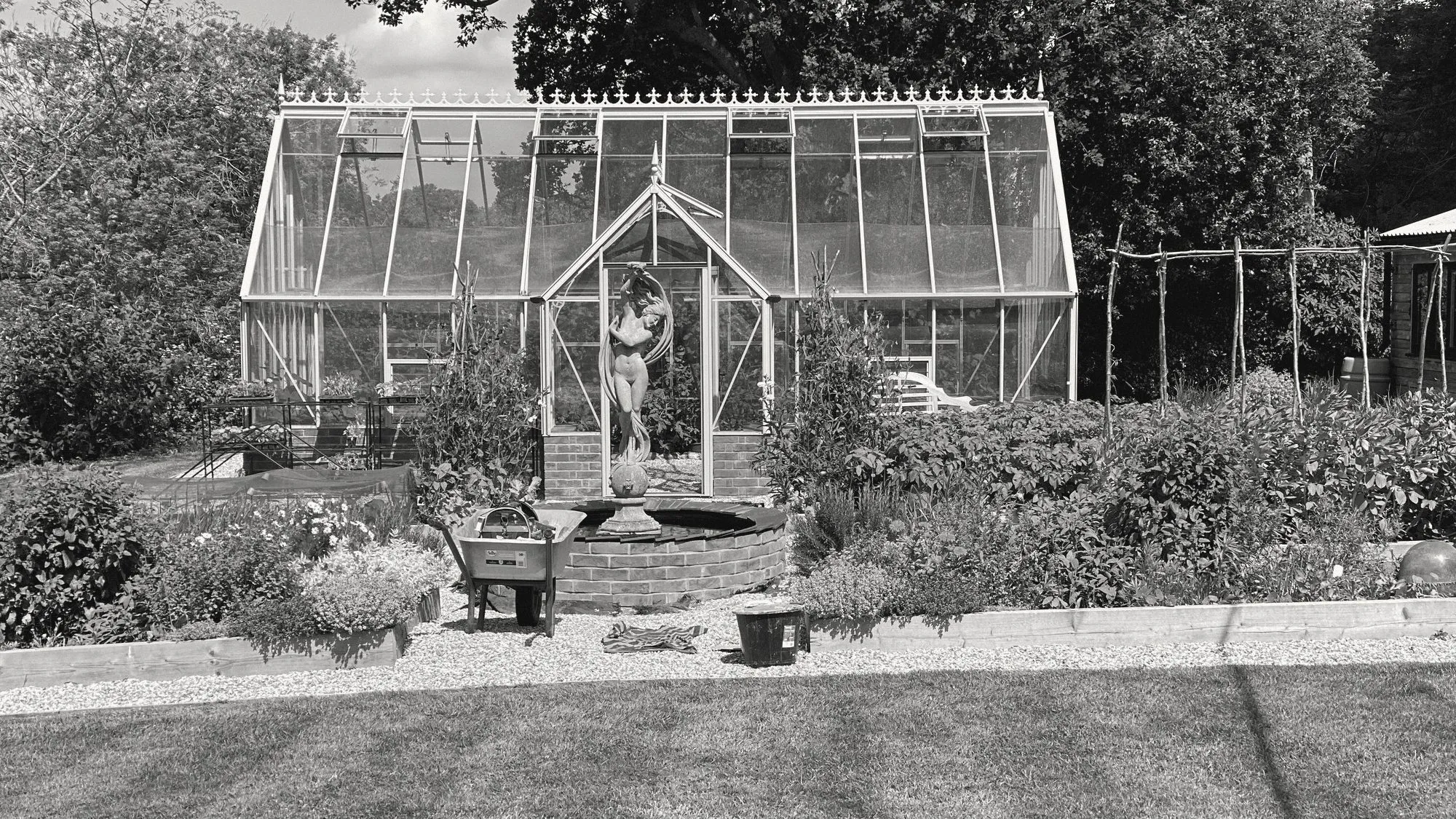
I live in Dorset with my family on three acres with a Victorian kitchen garden I'm slowly restoring. I've been fishing since I was eight. I enter long-distance walking and mountain-biking challenges. I'm 61, and I'm more useful to a scaling founder now than I was at 40, because I've seen the same patterns enough times to know what's actually going on.
"If the business only works when you're in the room, you don't have a business. You have a job with staff."
You are no longer accelerating the business. You are holding it at its current speed.
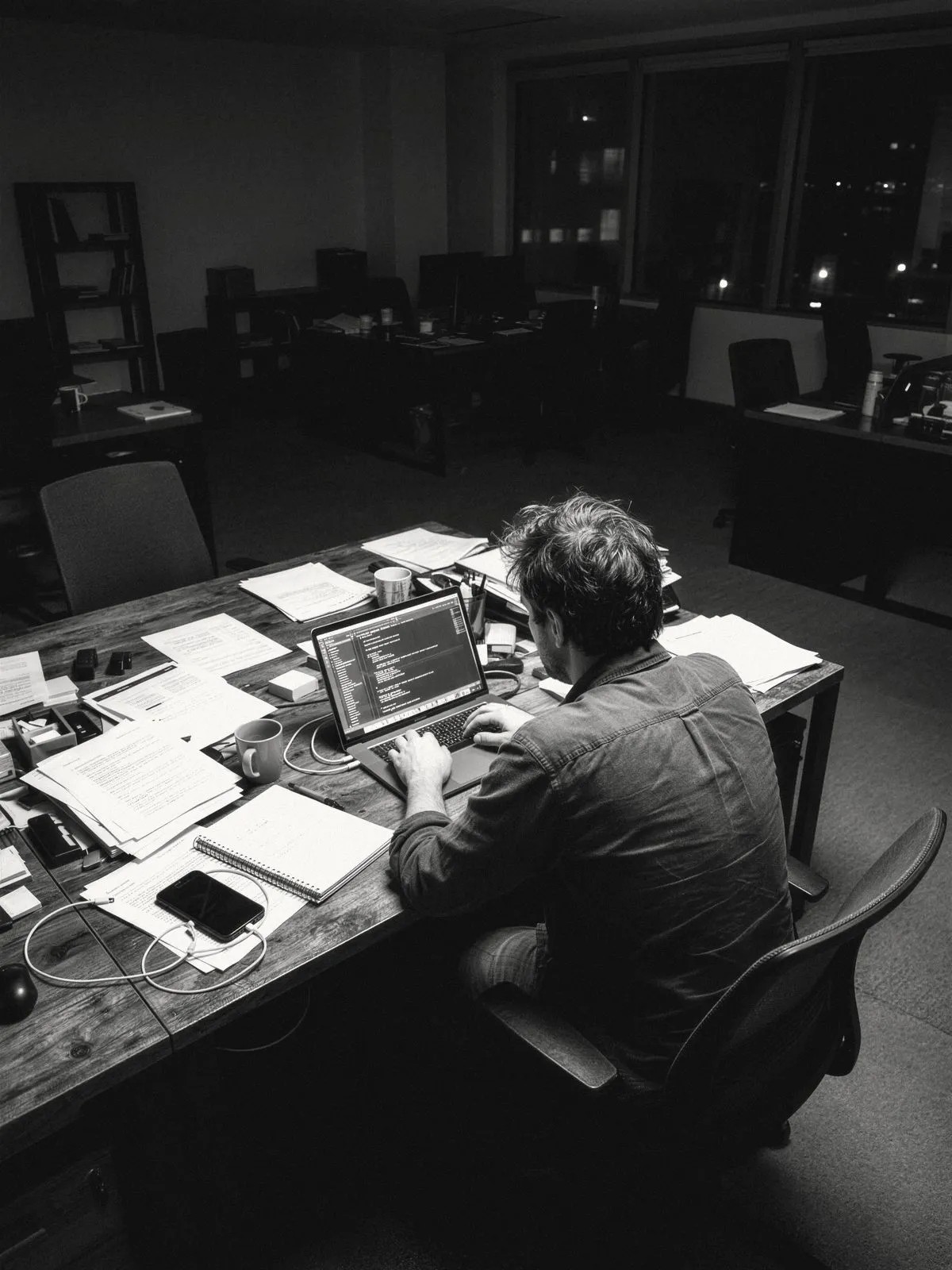
Everything runs through you. Every decision, every client email, every problem that lands. You told yourself that's just what being a founder is.
You're running out of ways to believe it.
Most founders I talk to are somewhere between one and three million, and they've already tried. A coach. A head of ops. An EOS implementation that stalled after four months. None of it fixed the execution layer, because none of it was designed to. That's not a people problem. It's a structure problem. A coach works on you, and EOS hands you the plan. A head of ops does the work for you. I build the system the work runs on, and then I hold your people to it.
Every quarter you stay the bottleneck is growth you don't get back. And an exit value that prices your absence in as a risk. Ryan was stuck at two million a year until he stopped being the bottleneck.
It's not that you've built something bad. You've built something real, and it's outgrown the way it's run. The business got bigger. The way it operates didn't.
If that's where you are, we should talk.

I take on three to five founders at a time now. You might be one of them.
You'll leave the first call knowing exactly where your bottleneck is.
Two long sessions a month, direct access in between, and a written 90-day plan in month one. A business that keeps moving when you're not in the room, and a quarter that doesn't look like the last three. That's what this builds towards. Thirty minutes. No pitch. No deck.
"What I needed was someone who'd scaled businesses before and could tell me straight what to fix, and that's exactly what I got with Richard. He's done it himself, and he was in my corner from the first call."Max Heubel, founder, TitanStack
No obligation. If I can't help, I'll tell you that too.
Not ready to talk? Take the Bottleneck Scorecard. 20 questions, 4 minutes →
Most founders worry it's too late or too tangled. It isn't. I've untangled worse, including my own. The first call tells you exactly where to start.